Harvard's DEI Agenda Drives Out Longtime Professor as Alumni Voice Growing Concerns
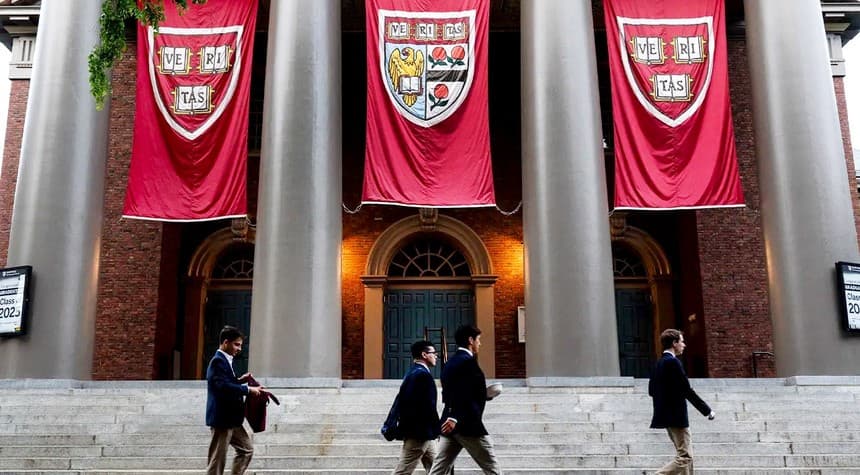
The halls of Harvard University, once considered the crown jewel of American higher education, find themselves at the center of yet another controversy that speaks to deeper troubles within our nation's academic institutions.
Shabbos Kestenbaum, a Harvard alumnus, has stepped forward with pointed criticism of his alma mater's diversity, equity and inclusion policies. His comments come on the heels of a stunning departure by Professor James Hankins, who walked away from Harvard after four decades of service, citing what he described as an anti-white, anti-Western culture that has taken root at the institution.
"It's shocking, but it's certainly not surprising," Kestenbaum stated, capturing what many observers have been thinking for years. His assessment cuts to the heart of the matter: Harvard's embrace of DEI has pushed merit to the sidelines in favor of ideology.
Professor Hankins laid out his reasons for leaving in a detailed essay, painting a picture of an institution that has strayed far from its founding principles. When a professor with 40 years of dedication decides enough is enough, it warrants serious attention. These are not the complaints of someone unfamiliar with the institution or its culture. This is an insider's account of an organization that has lost its way.
The timing of these revelations carries particular weight. As the nation watches various institutions grapple with the consequences of prioritizing ideology over excellence, Harvard's situation serves as a case study in what happens when universities abandon their core mission of pursuing truth and knowledge in favor of social engineering.
Kestenbaum's willingness to speak out demonstrates the growing frustration among those who have watched their institutions transform into something unrecognizable. Alumni who once took pride in their Harvard credentials now find themselves questioning what that degree represents in today's climate.
The departure of Professor Hankins represents more than one man's decision to retire. It symbolizes a breaking point for those who believe universities should be places where ideas are freely exchanged, where merit determines advancement, and where Western civilization's contributions to human progress are acknowledged rather than denigrated.
These DEI policies, sold to the public as promoting fairness and inclusion, have instead created environments where certain viewpoints are privileged while others are suppressed. The irony is rich: programs designed to promote diversity have produced intellectual conformity.
Harvard's leadership now faces a choice. They can dismiss these criticisms as the grumblings of those resistant to change, or they can engage in honest self-reflection about whether their policies serve the institution's educational mission.
The evidence suggests that DEI initiatives, as currently implemented, have failed to achieve their stated goals while simultaneously undermining the principles that made Harvard great in the first place. When longtime professors flee and alumni speak out, the message is clear: something has gone terribly wrong.
The question now is whether Harvard has the courage to course-correct, or whether it will continue down a path that prioritizes political ideology over academic excellence. The answer will determine not just Harvard's future, but serve as a bellwether for higher education across America.
Related: Texas Eliminates Sanctuary Policies with Sweeping Sheriff Partnership Requirement