The temperature in Washington has reached a boiling point, and folks, what we witnessed Tuesday night in a House hearing room tells you everything you need to know about where we are as a nation.
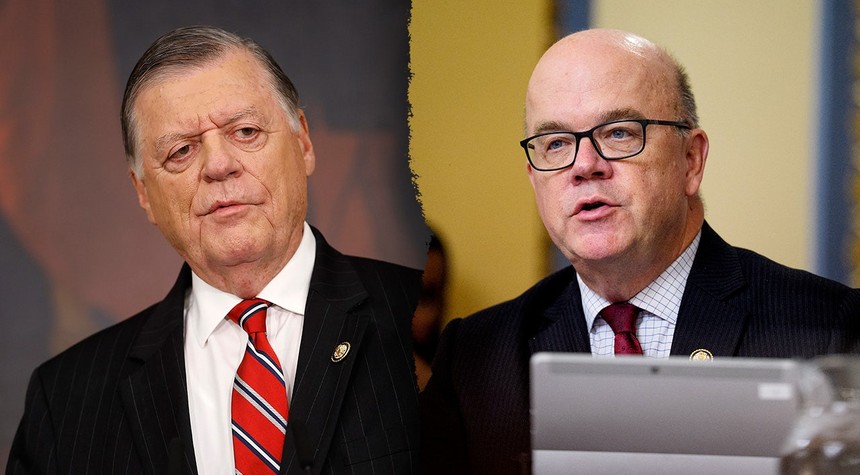
Two senior lawmakers, men who have walked these marble halls for years, found themselves in a heated exchange that laid bare the deep divisions paralyzing our government. House Appropriations Committee Chairman Tom Cole of Oklahoma and Massachusetts Representative Jim McGovern, the ranking Democrat on the House Rules Committee, engaged in the kind of verbal sparring that would make even seasoned political observers wince.
The issue at hand was legislation to end the government shutdown, but the conversation quickly spiraled into a blame game that highlighted just how far apart the two parties have drifted on fundamental questions of governance.
Cole did not mince words. He pointed his finger squarely at Democrats for what he characterized as a deliberate derailing of the federal government. “This is the stuff you said you would never do,” Cole stated with evident frustration. “You’re putting thousands of people out of work.”
The chairman painted a vivid picture of the human cost in his Oklahoma district. Workers who keep airplanes flying, employees at the National Weather Center, everyday Americans wondering when their next paycheck will arrive. These are not abstractions or political talking points. These are real people caught in the crossfire of Washington dysfunction.
McGovern, for his part, was equally adamant that Republicans bore responsibility for the crisis. His focus centered on enhanced Obamacare subsidies set to expire, provisions that Democrats wanted attached to the funding bill but Republicans refused to include. McGovern stated emphatically that his constituents were “getting screwed” and described receiving calls from people “out of their minds” trying to figure out how to afford healthcare without those subsidies.
The Massachusetts Democrat reminded Cole that Republicans had attempted more than fifty times to repeal the Affordable Care Act, suggesting this latest move was simply another chapter in that ongoing effort.
What followed was a back-and-forth that would be almost comical if the stakes were not so high. Cole insisted the most pressing crisis in his district involved workers not receiving paychecks. McGovern repeatedly asked whether anyone in Cole’s district was concerned about healthcare. Cole acknowledged that “people complain everywhere about everything” but maintained that the immediate emergency was the furloughed workers.
The exchange revealed something deeper than a simple policy disagreement. These subsidies, which Democrats passed during the pandemic, were characterized by Republicans as COVID-related temporary measures. Now, with the pandemic in the rearview mirror, Republicans see no reason to extend them permanently. Democrats, however, view them as essential healthcare support that millions of Americans have come to depend upon.
The fundamental question remains unanswered as federal workers miss paychecks and uncertainty grips the nation. Who bears responsibility when government grinds to a halt? Is it those who refuse to fund the government without policy concessions, or those who refuse to include those concessions in funding bills?
What is clear is that ordinary Americans are paying the price while their elected representatives engage in theatrical confrontations that generate more heat than light. The shutdown continues, and the path forward remains murky at best.
Related: Congressional Map Battle in Utah Highlights Growing National Redistricting Fight