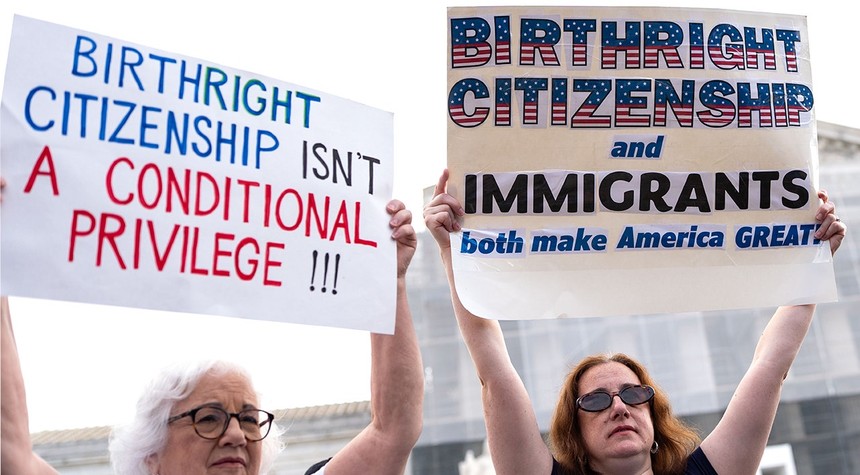
The Supreme Court stands at a crossroads this week, preparing to wrestle with a constitutional question that has sat largely undisturbed in the dusty corners of American jurisprudence for more than a century. The matter at hand is simple to state but profound in its implications: Who, exactly, qualifies as an American citizen?
On Wednesday, the nine justices will hear oral arguments concerning President Donald Trump’s executive order aimed at fundamentally reshaping birthright citizenship in America. This is the kind of case that comes along once in a generation, the kind that law professors will be teaching about for decades to come.
The executive order in question, signed by President Trump on his first day back in office, would end automatic citizenship for nearly all children born on American soil to undocumented parents or to parents holding temporary legal status in the country. Make no mistake, this represents a seismic shift in how America defines its citizenry.
Critics of the order argue it breaks with more than 150 years of established legal precedent. The Fourteenth Amendment’s Citizenship Clause has been interpreted to grant automatic citizenship to those born on American soil, with limited exceptions. Now, that interpretation faces its most serious challenge in modern memory.
The stakes could hardly be higher. Millions of Americans and lawful residents potentially face uncertainty about their status depending on how the Court rules. This is not merely an academic exercise in constitutional interpretation. Real lives hang in the balance.
For now, Trump’s plans remain on hold while the judicial process runs its course. A ruling is expected within three months, a timeline that seems almost leisurely given the magnitude of the question at hand, yet remarkably swift by the standards of the Supreme Court’s typical deliberations.
The president has been characteristically forthright in defending his position, arguing that his approach serves the national interest and falls within his constitutional authority. His supporters contend that birthright citizenship has been exploited and that clarifying its limits is long overdue.
The legal arguments promise to be complex, touching on questions of constitutional interpretation, executive authority, and the meaning of jurisdiction as understood by the framers of the Fourteenth Amendment. The justices will need to determine whether the amendment’s phrase “subject to the jurisdiction thereof” allows for the limitations Trump seeks to impose.
This case arrives at a moment when immigration policy has become one of the most contentious issues in American politics. The Court’s decision will not settle the broader immigration debate, but it will establish crucial boundaries around one fundamental aspect of it.
Whatever the outcome, this much is certain: The Supreme Court’s ruling will reshape the American landscape. It will affect how we define membership in the American community and who gets to claim the rights and responsibilities of citizenship. The justices carry a heavy burden as they approach this historic decision, one that will echo through American life for generations to come.
Related: House and Senate Trade Votes on DHS Funding While Both Chambers Leave for Two Week Recess