Homeland Security Seeks $70 Million Luxury Jet for Deportation Operations
Courage, as they say, is doing the right thing even when nobody's watching. But when it comes to spending taxpayer money, somebody ought to be watching. And watching closely.
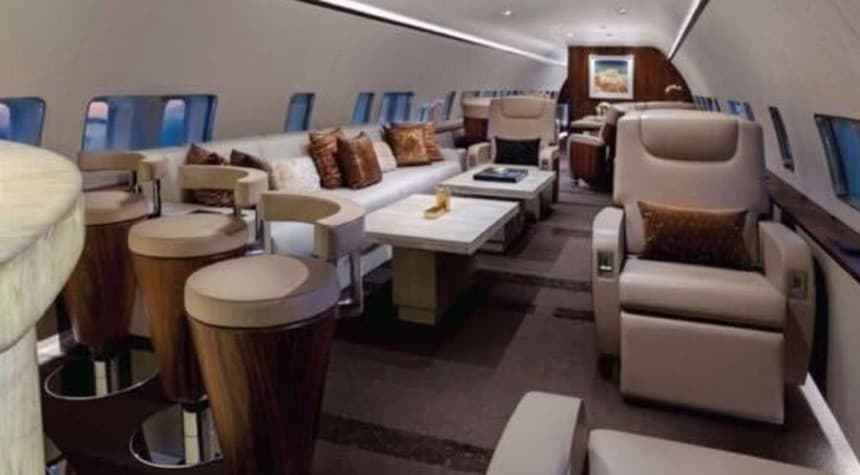
Documents and images obtained through investigative channels reveal that the Department of Homeland Security is seeking approval to purchase a Boeing 737 Max 8 executive jet for $70 million. The aircraft, which DHS has already begun leasing, features amenities more commonly associated with corporate executives than law enforcement operations: a bedroom with a queen-sized bed, showers, a full kitchen, four large flat-screen televisions, and a bar.
The request, currently under review by the White House Office of Management and Budget, has raised eyebrows even within DHS itself. Immigration and Customs Enforcement claims the aircraft would serve dual purposes: conducting deportation flights and transporting Cabinet officials. Yet the numbers tell a story that demands scrutiny.
The jet's luxury configuration accommodates a maximum of 18 passengers and can sleep 14 people. Standard deportation flights, by contrast, typically transport 50 to 100 detainees along with necessary medical personnel and security officers. Some deportation aircraft are equipped with metal floor bars for shackling high-risk individuals. This luxury jet was not designed with such realities in mind.
Multiple officials within DHS, speaking on condition of anonymity, have privately questioned whether this expenditure aligns with the stated mission. One official involved in the purchase request called the notion of using this particular aircraft for immigrant deportations "far-fetched," though leadership maintains otherwise.
A DHS spokesperson defended the purchase as a cost-saving measure, stating the plane operates at 40 percent less expense than military aircraft currently used for some ICE deportation flights. The spokesperson emphasized that this would save taxpayers "hundreds of millions of dollars" and represents part of Secretary Kristi Noem's broader efficiency initiatives.
However, context matters. ICE typically relies on charter flights for deportations, which have proven significantly more economical than military alternatives. When military flights began transporting immigrants to the detention facility at Guantánamo Bay, Cuba, last year, they cost ten times more than standard ICE charter operations.
DHS officials did not provide specific per-person costs for deportation flights aboard the luxury jet, leaving independent verification of the claimed savings impossible.
Some ICE officials initially deemed the aircraft too luxuriously outfitted for its stated deportation mission. A DHS spokesperson later clarified that "at least one of the bedrooms is currently being converted for seating to prepare the aircraft to meet the demands of its deportation mission set."
Secretary Noem's plan includes ICE purchasing five non-luxury 737 aircraft as part of a broader strategy for the agency to own its deportation fleet rather than continuing reliance on charter services.
The fundamental question remains straightforward: Does a $70 million luxury aircraft with sleeping quarters, a bar, and premium amenities represent responsible stewardship of public funds, or does it represent the kind of Washington excess that fuels public cynicism about government spending?
The American people deserve transparency about how their tax dollars are spent, particularly when those expenditures involve such substantial sums. As this request moves through the approval process, the burden of proof rests squarely on DHS leadership to demonstrate that this purchase serves the public interest rather than executive comfort.
In Washington, as in life, actions speak louder than words. The question now is whether anyone in authority is listening.
Related: Trump Takes Economic Message to Georgia as Special Election Heats Up