
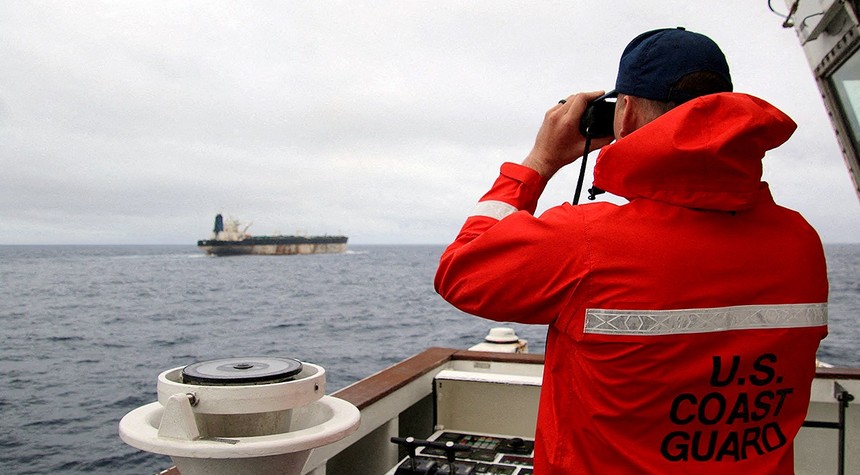
The men and women of the United States Coast Guard find themselves in an all-too-familiar Washington predicament: caught between political posturing and the hard realities of defending American waters.
Republican lawmakers charged with Coast Guard oversight are raising the alarm that the service branch stands alone among military forces, operating outside Pentagon authority and now bearing the brunt of a Democratic funding blockade aimed squarely at immigration enforcement.
Senate Minority Leader Charles Schumer is holding the line on Department of Homeland Security appropriations, demanding three conditions before negotiations resume: restrictions on where ICE agents can operate, requirements that agents be publicly identified and wear body cameras, and sweeping changes to use-of-force policies.
Here is where the situation takes a troubling turn. ICE and related immigration agencies remain funded through separate appropriations. Meanwhile, FEMA, the Merchant Marine, and crucially, the Coast Guard are left waiting for paychecks that may not arrive.
“Many young Coast Guard families and personnel live paycheck to paycheck,” said Rep. Mark Begich of Alaska, who serves on the House Transportation Subcommittee overseeing maritime and Coast Guard operations. “Asking them to continue protecting our waters without the stability they deserve places a real burden on the very people who keep Alaska safe.”
The timing could hardly be worse. Senator Dan Sullivan, Begich’s colleague from the Last Frontier, warns that foreign military activity near Alaska has climbed sharply in recent months. Russian and Chinese forces are coordinating more closely in Arctic waters, a development that has gone largely unnoticed beyond the region.
“Let’s just say the world’s largest fleet of oceanographic survey ships wasn’t off the coast of Alaska to ‘save the whales,'” Sullivan said in a recent interview, his meaning unmistakable.
The strategic importance of Alaska cannot be overstated. The state comprises half the nation’s entire coastline and three-fifths of its seafood fisheries. Both depend heavily on Coast Guard protection. Yet as Moscow and Beijing probe American defenses in the Arctic, the guardians of those waters face the prospect of missing paychecks.
Sullivan has been pushing ambitious plans to reopen a World War II-era base, commission new Arctic icebreakers, and construct a deepwater port near Russian territory. These are not vanity projects but necessary responses to a changing geopolitical landscape in the far north.
The situation extends beyond Alaska. Rep. Jimmy Patronis of Florida, whose district includes Naval Air Station Pensacola and its Coast Guard presence, points out that servicemembers conducting dangerous drug interdictions may soon work without pay.
While Pentagon strikes on drug trafficking vessels capture headlines, the Coast Guard’s role in interdictions remains vital yet underappreciated. These are the crews flying aging helicopters into harm’s way, boarding suspect vessels, and keeping narcotics off American streets.
Begich put it plainly: the Coast Guard should never be treated as “collateral damage in Washington’s political fights.”
The situation reveals a fundamental problem with how the nation’s capital operates. Lawmakers on both sides claim to support the troops, yet here stand Coast Guard families wondering how they will make rent while their loved ones patrol hostile waters and intercept drug runners.
The question facing Washington is straightforward: Can Congress separate its immigration battles from the basic obligation to pay the men and women defending American interests? Or will political theater once again trump the practical needs of those who serve?
For Alaska’s lawmakers and their colleagues overseeing Coast Guard operations, the answer needs to come quickly. Russian and Chinese vessels are not waiting for Washington to sort out its appropriations drama.
Related: Homeland Security Seeks $70 Million Luxury Jet for Deportation Operations