Mecklenburg County Sheriff Stumbles When Asked Which Branch of Government He Serves Under
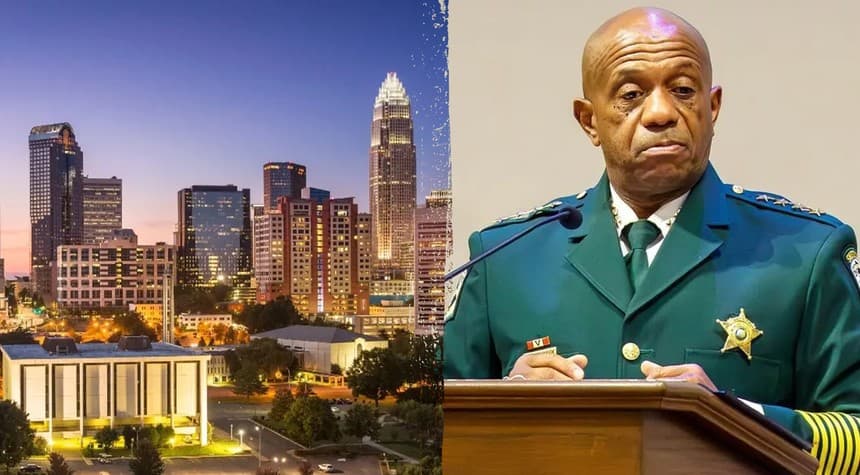
There are moments in public hearings that stop you cold, moments when the fundamentals get laid bare in ways nobody quite expected. What happened in a North Carolina House Oversight Committee hearing this week was one of those moments.
Sheriff Garry McFadden of Mecklenburg County found himself unable to answer a question that most middle school students could handle: Which branch of government does a county sheriff operate under?
The hearing itself was convened for serious business. The recent killing of Iryna Zarutska, a young Ukrainian woman in Charlotte, had sparked urgent questions about local cooperation with federal immigration authorities. McFadden has long opposed working with U.S. Immigration and Customs Enforcement, a stance that has made him a lightning rod in debates over sanctuary policies.
Republican state Representative Allen Chesser was questioning the sheriff when the exchange took an unexpected turn. His question seemed straightforward enough: "What branch of government do you operate under?"
McFadden's answer? "Mecklenburg County."
When Chesser repeated the question, the sheriff tried again: "The Constitution of the United States."
Chesser clarified that the Constitution establishes the branches of government, but he was asking which branch the sheriff falls under. McFadden returned to his first answer: "Mecklenburg County."
Then came the question that will likely follow this sheriff for the remainder of his tenure: "Are you aware of how many branches of government there are?"
Without hesitation, McFadden answered, "No."
After what witnesses described as a lengthy, uncomfortable pause, Chesser offered what amounted to a civics lesson on the record. He laid out the three branches: legislative, executive, and judicial. Then he asked the sheriff to choose which one applied to him.
McFadden guessed judicial. He was wrong. Sheriffs operate under the executive branch, as law enforcement officers charged with executing and enforcing the laws.
This is not merely an academic question or a game of constitutional trivia. The distinction matters profoundly when it comes to understanding the sheriff's duties and responsibilities. As an executive officer, McFadden's job is to enforce the law, not to interpret it or make it.
That brings us back to why this hearing was called in the first place. Chesser pressed forward, asking how the sheriff reconciles his responsibility as an executive officer to enforce the law with his stated opposition to cooperating with federal immigration authorities.
The question hangs heavy. If a sheriff does not understand which branch of government he serves under, how can the public trust that he understands the scope and limits of his authority? If he does not grasp these basic structural elements of American government, what other fundamental aspects of his constitutional duties might be unclear to him?
Mecklenburg County encompasses Charlotte, North Carolina's largest city and a growing metropolitan area. The sheriff's office there wields considerable authority and responsibility. The residents of that county deserve leadership that understands not just the practical aspects of law enforcement, but the constitutional framework that gives that enforcement its legitimacy and defines its boundaries.
This exchange raises questions that extend beyond one sheriff's knowledge gaps. It speaks to the broader issue of elected officials who may be more focused on political positioning than on understanding the fundamental structures they have sworn to uphold.
The facts here speak for themselves, and they speak loudly.
Related: Attorney General Pam Bondi Faces Tough Questions on Epstein Files and DOJ Restructuring