
The wheels are turning, and they are turning toward a future that looks remarkably different from the energy landscape America has known for decades.
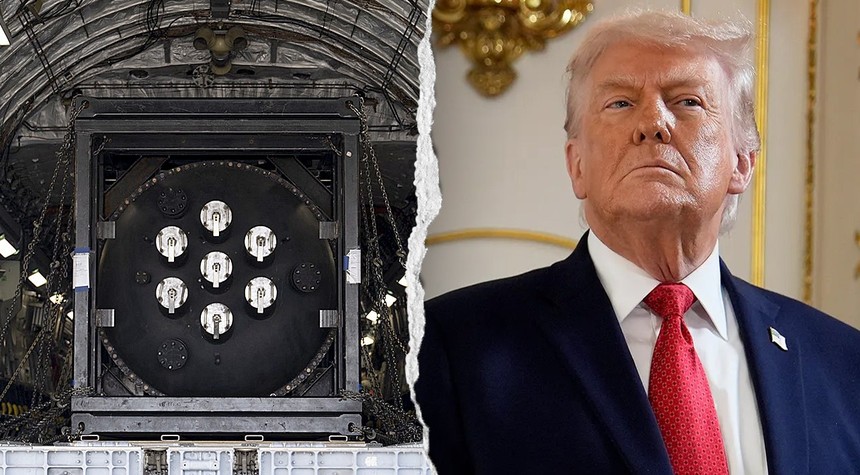
On Sunday, the Department of Defense executed what can only be described as a pivotal moment in our nation’s energy evolution. A C-17 cargo aircraft lifted off from March Air Reserve Base in California carrying precious cargo: a next-generation nuclear reactor bound for Utah. The destination was Hill Air Force Base, with the reactor’s ultimate home being the Utah San Rafael Energy Lab in Orangeville, where it will undergo rigorous testing and evaluation.
This is not merely about moving equipment from point A to point B. This represents the tangible manifestation of President Trump’s executive order to modernize America’s nuclear energy infrastructure and bolster national security in an increasingly competitive global landscape.
The images shared by the Department of Defense tell a story of American ingenuity meeting strategic necessity. “We’re advancing President Trump’s executive order on nuclear energy,” the agency stated plainly. “Moments from now, we will airlift a next-generation nuclear reactor.”
Former Energy Secretary Rick Perry understands the stakes better than most. The intersection of nuclear energy capability and emerging technologies like artificial intelligence is not some abstract policy discussion. It represents the difference between American technological dominance and strategic vulnerability.
The Defense Department’s statement captured the gravity of this moment with clarity: “By harnessing the power of advanced nuclear technology, we are not only enhancing our national security but championing a future of American energy dominance. This event is a testament to the ingenuity of the American spirit and a critical advancement in securing our nation’s freedom and strength for generations to come.”
The successful installation of this reactor opens doors that have remained closed for far too long. Energy resilience for military installations and remote defense operations is not a luxury in the modern era. It is a necessity. The agency emphasized what they called an “agile, innovative and commercial-first approach” to addressing critical infrastructure challenges.
This development follows the administration’s commitment of one billion dollars toward restarting a nuclear reactor at Three Mile Island, a location that carries significant historical weight in America’s nuclear energy narrative. That the administration would invest so heavily in nuclear infrastructure at such a symbolically charged location speaks volumes about their commitment to this path forward.
Back in May, President Trump signed multiple executive orders designed to expand domestic nuclear energy development. Interior Secretary Doug Burgum offered a frank assessment of where America stands: the nation that led the postwar world on “all things nuclear” had allowed itself to become “choked with overregulation” and watched its capabilities “stagnate.”
Defense Secretary Pete Hegseth framed the issue in stark competitive terms. “We are going to have the lights on and AI operating when others are not because of our nuclear capabilities,” he stated.
The executive orders call for reforming Energy Department research and development programs, accelerating reactor testing at national laboratories, and establishing pilot programs for new construction. These are not modest proposals. They represent a fundamental reassessment of how America approaches energy security in the twenty-first century.
The White House has been clear in its messaging: nuclear energy is necessary to power the next generation of technologies that will secure America’s global industrial and military leadership. As artificial intelligence capabilities expand exponentially, the energy demands grow in parallel. Nations that can reliably power these technologies will lead. Those that cannot will follow.
The reactor now sitting in Utah represents more than advanced engineering. It represents a choice about America’s future, made concrete and transported across the American West on a military cargo plane. The testing and evaluation phase will determine whether this technology can deliver on its promise, but the commitment to finding out has already been made.
Related: Oregon Man Arrested With Manifesto Detailing Plot to Kill ICE Agents