Attorney General Bondi Faces Bipartisan Criticism Over Epstein Document Release
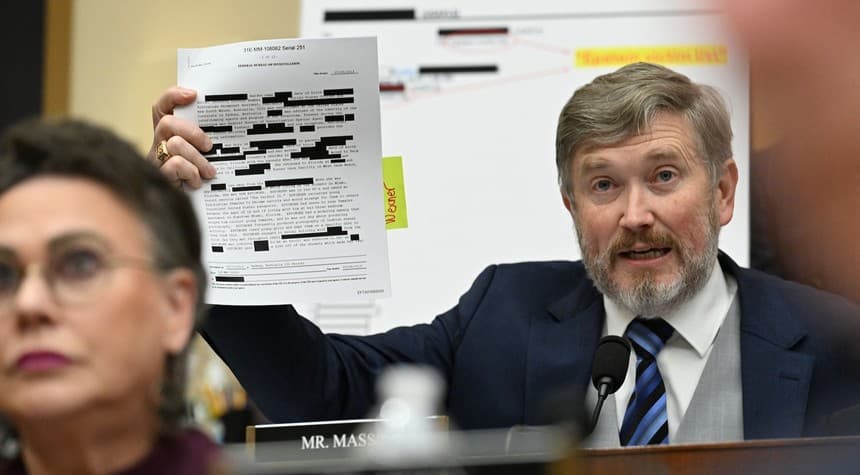
There are moments in Washington when the mask slips, when the veneer of competence cracks wide open for all to see. Wednesday's hearing before the House Judiciary Committee may have been one of those moments for Attorney General Pam Bondi.
Republican Representative Thomas Massie of Kentucky did not mince words in his Sunday assessment of Bondi's performance. Speaking candidly about the contentious hearing centered on the Justice Department's release of files related to convicted sex offender Jeffrey Epstein, Massie delivered a damning verdict on the nation's top law enforcement official.
"I don't think she did very well," Massie stated plainly. "She came with a book full of insults, one for each congressperson. She obviously had one for me."
The congressman's criticism cuts deeper than mere disappointment with rhetorical style. When pressed on whether he maintained confidence in Bondi's leadership, Massie suggested the attorney general lacked confidence in herself. "She wasn't confident enough to engage in anything but name-calling in a hearing," he observed. "So no, I don't have confidence in her. She hasn't got any sort of accountability there at the DOJ."
The hearing itself proved to be a powder keg of tension and accusation. During Massie's questioning, Bondi deployed the now-familiar epithet of "Trump derangement syndrome" against the congressman, echoing an attack line President Donald Trump occasionally uses against critics. But it was another moment that may prove more difficult to explain away.
When Democratic Representative Pramila Jayapal asked the group of Epstein victims seated behind Bondi to raise their hands if they had been unable to meet with the Justice Department, every single survivor present raised their hand. Bondi refused to turn and acknowledge them, dismissing the gesture as "theatrics."
Massie called that decision "cold" and suggested Bondi was "afraid" to face the victims she is charged with serving.
The controversy stems from the Justice Department's release of more than three million pages of files from the Epstein case, a document dump that has triggered resignations and recriminations across the globe. Several powerful figures in the United States were named in the files, though not accused of wrongdoing.
The real issue, according to Massie, lies in how those documents were handled. He has accused the Justice Department of a troubling double standard: exposing victim identities in some instances while over-redacting the names of powerful men and possible co-conspirators in Epstein's sex trafficking operation.
The congressman's concerns appear to have merit. Massie noted that within forty minutes of his pointing out over-redactions to the Justice Department, officials unredacted certain documents. "It's clear that their work is not done here yet," he said.
The pattern becomes more disturbing upon closer examination. After the initial release, the Justice Department allowed members of Congress to view less-redacted versions of the files. Massie discovered what appeared to be improper redactions on an undated document containing twenty names and corresponding photographs. In the public version, only two names and photos were visible: those of Epstein himself and Ghislaine Maxwell.
Working in bipartisan fashion with Democratic Representative Ro Khanna, who has led the charge for transparency alongside Massie, the congressman applied pressure. The Justice Department subsequently unredacted additional names.
The question that hangs over this entire affair is one of competence and intent. Was this sloppy work by an overwhelmed department, or something more calculated? Either answer should trouble Americans who believe in equal justice under law.
For now, Massie's assessment stands as a stark warning from within the attorney general's own party: accountability remains absent at the highest levels of the Justice Department.
Related: House Democrats Demand Investigation After Search History List Surfaces at Judiciary Hearing