
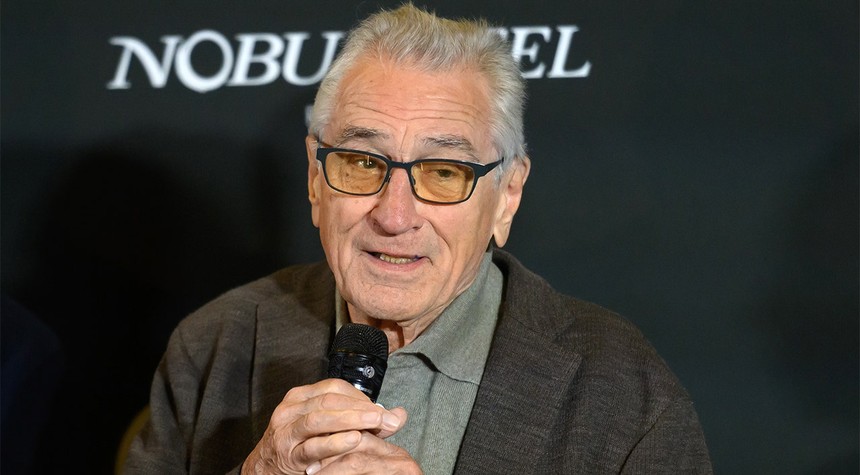
There are moments in American political discourse when the temperature rises to a level that ought to give every citizen pause, regardless of where they stand on the political spectrum. This appears to be one of those moments.
Actor Robert De Niro sat down for an interview on a political podcast and made claims that deserve scrutiny, not because of who said them, but because of what they represent in our current national conversation. According to De Niro, President Donald Trump will “never leave” office and must be forcibly removed by the American people.
The interview covered familiar territory for those who have followed the increasingly heated rhetoric surrounding the Trump presidency. When asked about the prospect of a presidential transition in three years, De Niro did not mince words. He stated flatly that Trump would not leave voluntarily and that it falls to citizens to “get rid of him.”
Now, let us be clear about what we are examining here. These are not casual observations made in passing. De Niro went further, claiming that Trump’s comments about nationalizing elections were not jokes but genuine intentions. He called for protests on a scale that would dwarf previous demonstrations, invoking the Vietnam War era as a historical parallel.
The actor specifically suggested that millions of Americans would need to take to the streets in protest, referencing an upcoming demonstration and arguing that participation numbers in the single-digit millions would be insufficient.
This raises several questions that responsible Americans should consider. First, what evidence supports the claim that a sitting president would refuse to honor the constitutional process of transition? Second, what does it say about our political culture when such apocalyptic predictions become commonplace in mainstream discourse?
The historical record shows that American presidents, regardless of party affiliation, have honored the peaceful transfer of power since the founding of the republic. This tradition has survived civil war, world wars, assassinations, and impeachments. It represents one of the defining characteristics of American democracy.
Critics of President Trump have made similar predictions before. Some suggested he would not accept the results of the 2016 election if he lost. Others have questioned whether he would respect midterm election outcomes. Yet the machinery of American democracy has continued to function.
De Niro’s call for mass protests and his comparison to the Vietnam era demonstrations suggests a belief that extraordinary measures will be necessary to preserve democratic norms. But one might ask whether such inflammatory rhetoric itself threatens those very norms by eroding public confidence in constitutional processes.
The White House has not responded to requests for comment on these specific claims, which is perhaps understandable given the volume of such statements emanating from various quarters of the entertainment industry and political opposition.
What Americans deserve is a political discourse grounded in facts rather than speculation, in constitutional processes rather than apocalyptic predictions. Whether one supports or opposes President Trump, the strength of our republic depends on faith in our institutions and our ability to resolve political differences through established democratic means.
The question facing citizens is not whether Hollywood actors have the right to express their political views. They certainly do. The question is whether Americans will allow fear and speculation to replace reasoned debate about the actual policies and actions of their elected officials.
Related: Trump Administration Increases Worldwide Tariff After Legal Setback