
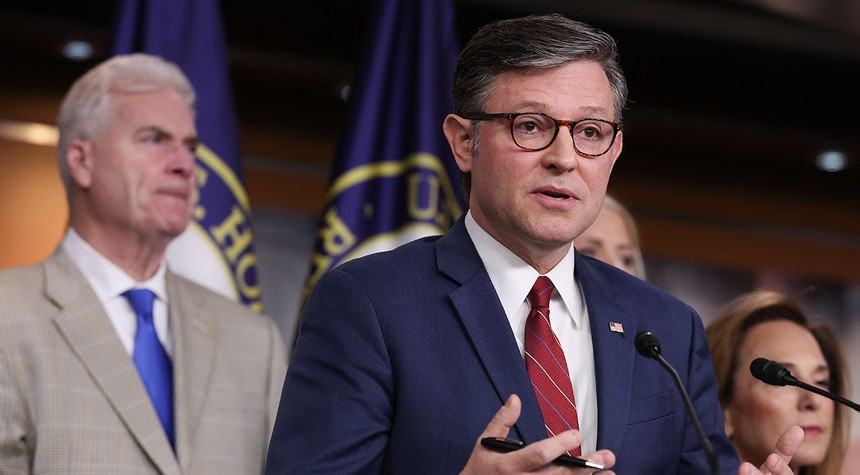
The House of Representatives witnessed an unusual fracture in Republican unity Wednesday when seven members of the GOP conference broke with their leadership to advance a Democrat-sponsored Ukraine security package. The measure passed its procedural hurdle by a vote of 218-204, with every Democrat present voting in favor.
This is the kind of Washington drama that tells you more about the state of our politics than a thousand position papers ever could. When members of Congress cross party lines on a vote this significant, it warrants a closer look at what is driving their decisions and what it means for the direction of American foreign policy.
The Republicans who voted to advance the legislation represent a diverse cross-section of the conference. Representatives Don Bacon of Nebraska, Brian Fitzpatrick of Pennsylvania, Mike Lawler of New York, Michael McCaul of Texas, Max Miller of Ohio, and Joe Wilson of South Carolina all defied their leadership’s position. They were joined by Representative Kevin Kiley of California, an independent who typically caucuses with Republicans.
The security package itself contains provisions that would have seemed routine in another era of American foreign policy. It reaffirms United States support for Ukraine and NATO, authorizes more than one billion dollars in new military assistance, provides support for Ukraine’s postwar reconstruction efforts, and imposes fresh sanctions on Russia and any entities supporting Moscow’s war effort should the conflict continue.
The question that hangs over this vote is not merely about the merits of supporting Ukraine. It is about what happens when members of Congress believe their duty to what they see as national security interests outweighs their obligation to party discipline. Each of these seven Republicans will face questions from their constituents and potentially from primary challengers about why they sided with the opposition party on a high-profile vote.
Representative McCaul, who chairs the House Foreign Affairs Committee, has been particularly vocal about the need to support Ukraine. His expertise in foreign policy matters likely informed his decision to break ranks. Others, like Fitzpatrick and Bacon, represent districts where bipartisan cooperation is often viewed more favorably than rigid party loyalty.
For House Democrats, this represents a rare victory in a chamber where they find themselves in the minority. They managed to attract just enough Republican support to advance their legislative priority without needing to make significant compromises to win over a larger bloc of GOP votes.
The vote also highlights the ongoing tension within the Republican conference about America’s role in supporting Ukraine against Russian aggression. While some members view continued aid as essential to deterring further Russian expansion and supporting a democratic ally, others question the wisdom of committing additional resources overseas when domestic priorities remain unaddressed.
As this legislation moves forward, the seven Republicans who broke ranks will likely face pressure from both sides. Their supporters will praise them for putting principle over politics, while critics will accuse them of undermining party unity at a critical moment. The ultimate test will come when their constituents render their verdict at the ballot box.
Related: Paralympian Turek Secures Democratic Nomination in Battle for Iowa Senate Seat