Supreme Court Unanimously Backs Tougher Standards for Asylum Cases
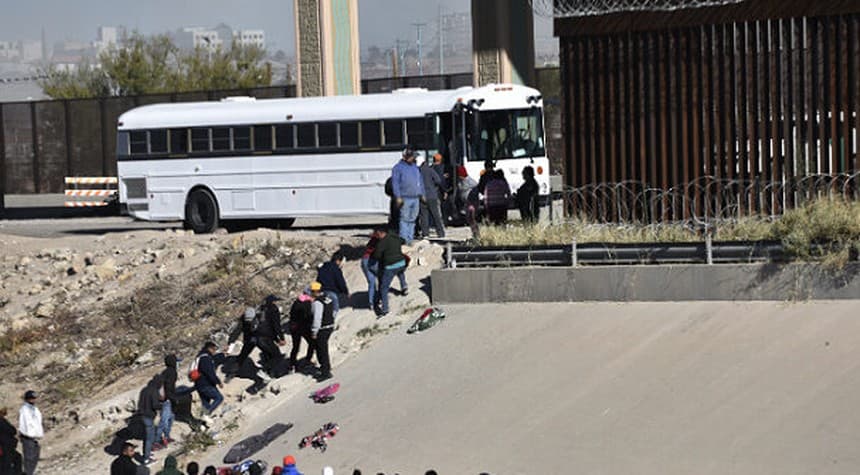
The Supreme Court has delivered a unanimous verdict that fundamentally reshapes the landscape of immigration enforcement, and the implications are profound.
In a decision that crossed ideological lines, the nation's highest court ruled that federal judges must maintain an extraordinarily high bar before overturning asylum rejections issued by the Justice Department's immigration courts. This is not some narrow technical ruling buried in legal minutiae. This is a watershed moment in the ongoing battle over border security and the rule of law.
The case, Urias-Orellana v. Bondi, represents a significant victory for the Trump administration's efforts to restore order to an immigration system that had become, by many accounts, a revolving door of exploitation and abuse.
What makes this ruling particularly noteworthy is its author. Justice Ketanji Brown Jackson, widely regarded as the court's most progressive member, penned the opinion. When the left and right flanks of the Supreme Court speak with one voice, Americans would do well to pay attention.
Justice Jackson's language leaves little room for interpretation. A migrant seeking to overturn an asylum denial must demonstrate that "the evidence he presented was so compelling that no reasonable factfinder could fail to find the requisite fear of persecution." That is a mountain to climb, and it was designed to be exactly that.
The practical effect is clear. Federal judges can no longer substitute their judgment for that of immigration courts except in cases of egregious error. This closes a pathway that had been exploited for years under the previous administration's policies.
The numbers tell a sobering story. Under the Biden administration, the asylum approval rate hovered around 50 percent. The Trump Justice Department has moved aggressively to change that trajectory, removing immigration judges viewed as overly sympathetic to migrants and appointing jurists committed to enforcing existing law rather than reimagining it from the bench.
The results have been dramatic. Asylum approvals, green card issuances, and citizenship grants have all experienced sharp declines. Meanwhile, migrants detained by Immigration and Customs Enforcement are increasingly choosing voluntary departure. In December alone, 38 percent of detained migrants opted to return home rather than pursue lengthy legal battles.
This represents the dismantling of what critics have long called the "catch and release" system. For years, asylum loopholes allowed millions of economic migrants to enter the country, receive work permits, and effectively disappear into American communities while their cases languished in backlogged courts for years.
The human cost of this system extended far beyond immigration policy. Roughly 10 million people entered the country illegally during the Biden years, creating downward pressure on wages for American workers while simultaneously driving up housing costs in communities across the nation.
The Trump administration's approach represents a fundamental shift in philosophy. Rather than viewing immigration courts as a pathway to residency for anyone who reaches American soil, the current Justice Department treats asylum as what it was intended to be: a lifeline for those facing genuine persecution, not an employment program for economic migrants.
The cartels that profit from human smuggling built their business model on the assumption that asylum claims would provide extended stays in America, allowing migrants to work and repay their smuggling debts. This Supreme Court decision disrupts that calculation significantly.
Whether one views this ruling as long-overdue enforcement of immigration law or as an unnecessary hardening of the system, the legal reality is now settled. The Supreme Court has spoken unanimously, and the message is unmistakable: asylum is not an automatic ticket to American residency, and federal judges are not empowered to treat it as such.
Related: Senate Prepares War Powers Vote as Iran Military Operation Continues