

The Texas House has approved a new redistricting plan projected to give Republicans several additional U.S. House seats in the 2026 midterm elections. The measure, supported by former President Donald Trump, passed on Wednesday in an 88–52 vote and now moves to the state Senate, according to the Associated Press.
The proposal, drafted by Republican leaders with input from Trump advisers, redraws districts in major urban areas, including Houston, Dallas, and Austin, as well as across South Texas, according to the Texas Tribune.
Supporters argue the plan accounts for population changes since the 2020 census and ensures fairer representation for rural communities. Opponents, including Democratic lawmakers and voting rights groups, contend it is designed to weaken minority voting strength and secure long-term Republican control of Texas’s congressional delegation.
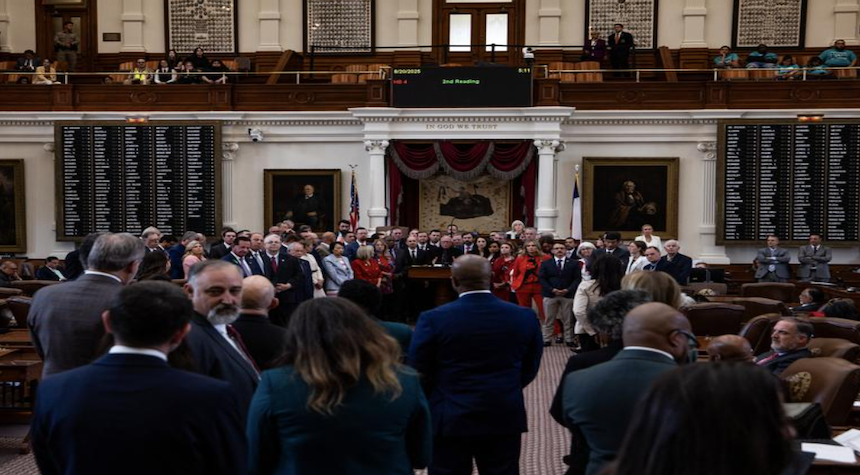
Democrats sought to delay the vote by staging a two-week walkout to prevent a quorum. Gov. Greg Abbott and Republican leaders authorized arrest warrants for absent members, pledging to compel their return to the state. Lawmakers eventually reconvened, and the bill advanced. Legal challenges are already being prepared, with critics citing potential violations of the Voting Rights Act and claims of racial gerrymandering.
Part of a National Trend
The redistricting fight in Texas reflects a broader national battle over congressional maps ahead of the 2026 elections. While redistricting traditionally follows the decennial census, Republican officials in several states, including Florida, Georgia, and North Carolina, are considering mid-decade revisions, citing population growth and political shifts.
Democrats argue such efforts are destabilizing and unprecedented, warning they could erode public confidence in elections and spark years of litigation.
California’s Response
California Gov. Gavin Newsom has announced a potential countermeasure. If Texas enacts its map, California voters will consider Proposition 50 in a Nov. 4 special election. The measure would suspend the state’s independent redistricting commission and allow the Democratic-controlled legislature to draw new congressional lines.

Supporters say the proposal is a defensive response to Republican-led changes in Texas and other states. It would likely target several Republican-leaning districts in Orange County, the Central Valley, and Northern California.
Critics warn the move would undermine California’s commitment to independent redistricting. Public hearings have drawn thousands of comments, and Republican leaders in the state have vowed to challenge the measure in court if it passes.
Looking Ahead
With Texas advancing its redistricting bill and California preparing a potential counteraction, the dispute is expected to escalate nationally. Court challenges in both states are likely, raising the prospect that federal courts, and potentially the U.S. Supreme Court, will weigh in before the 2026 elections.