Trump Administration Removes Federal Judge's Pick for US Attorney in Virginia
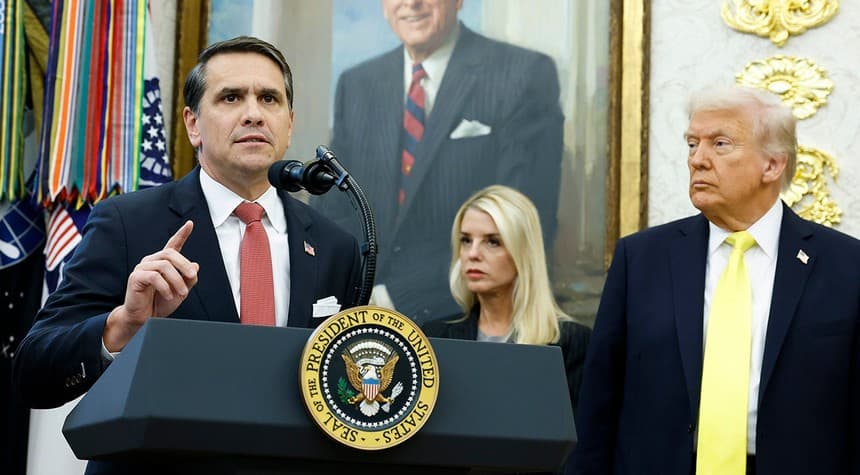
The battle lines are drawn, and they run straight through the heart of our constitutional framework. The Justice Department on Friday fired its second court-appointed United States attorney in as many weeks, and if you are keeping score at home, this confrontation between the executive and judicial branches shows no signs of cooling down.
The latest casualty is James Hundley, a veteran lawyer whom federal judges in the Eastern District of Virginia had selected to fill a vacancy. That vacancy arose after Trump-appointee Lindsey Halligan stepped down last month, following a court determination that she had been serving illegitimately in the role.
Deputy Attorney General Todd Blanche did not mince words when announcing Hundley's termination on social media. "Here we go again. EDVA judges do not pick our US Attorney. POTUS does. James Hundley, you're fired!" Blanche wrote, invoking the president's signature phrase with unmistakable purpose.
Now, let us be clear about what is happening here. This is not merely a personnel matter or a bureaucratic squabble. This is a fundamental dispute over constitutional authority that goes to the very structure of our government. At stake is the question of who holds the power to appoint the top prosecutors in each of the nation's 93 federal court districts.
The Constitution grants the president authority to nominate United States attorneys, with the advice and consent of the Senate. However, federal law also provides that when vacancies occur, district court judges may appoint interim prosecutors to serve until the president nominates and the Senate confirms a permanent replacement. The tension arises when these two provisions collide in practice.
The Trump administration's position is straightforward and, frankly, constitutionally sound. The executive branch maintains that the president's appointment power cannot be usurped by the judiciary, even on a temporary basis. The Justice Department argues that allowing judges to select prosecutors undermines the unitary executive principle and creates an untenable separation of powers problem.
Critics of the administration's approach contend that the firings represent an overreach and an attack on judicial independence. They argue that the statutory framework exists precisely to ensure continuity in federal law enforcement when vacancies arise.
But here is the rub. The administration inherited a situation where court-appointed attorneys were serving in positions that, according to the executive branch's reading of the law, they had no legitimate authority to hold. The question then becomes whether the president should simply accept this state of affairs or assert what he views as his constitutional prerogative.
Attorney General Pam Bondi has been making the administration's case on Capitol Hill, defending these decisions as necessary to restore proper constitutional order. The swift pace of these removals suggests that more confrontations may be on the horizon.
This is the kind of constitutional crisis that does not announce itself with trumpets and fanfare. It builds case by case, decision by decision, until suddenly we find ourselves at a crossroads where fundamental questions about the balance of power demand answers.
The courts will ultimately have their say, as they must. But make no mistake, this dispute will shape the relationship between the executive and judicial branches for years to come.
Related: British Labour Party Operative Faces Visa Revocation Over Censorship Activities