Trump Withdraws National Guard from Three Major Cities After Crime Reduction
The question is not whether federal intervention worked in America's most troubled cities. The question is what happens next.
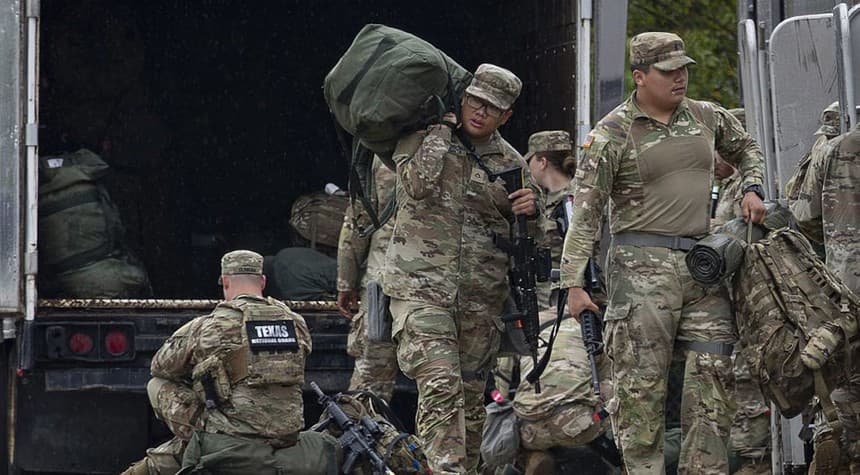
President Donald Trump announced Wednesday the withdrawal of National Guard troops from Chicago, Los Angeles, and Portland, three cities that have struggled mightily with crime in recent years. The decision comes even as the administration claims significant progress in reducing criminal activity during the federal deployment.
"We are removing the National Guard from Chicago, Los Angeles, and Portland, despite the fact that crime has been greatly reduced by having these great Patriots in those cities, and only by that fact," the president stated. He added that these cities "were gone if it were not for the Federal Government stepping in."
This is the kind of statement that demands scrutiny. If the intervention proved successful, why end it now? The administration's answer suggests this is not a retreat but rather a strategic repositioning.
The president made clear that this withdrawal carries conditions. Should crime rates climb again in these metropolitan areas, federal forces could return "perhaps in a much different and stronger form." That phrase alone should give pause to local officials who have resisted federal assistance.
The timing of this announcement cannot be separated from recent legal developments. Last week, the Supreme Court dealt the administration a significant blow when it denied a request to deploy National Guard troops specifically to protect Immigration and Customs Enforcement agents conducting deportation operations in Chicago. The court's unsigned order stated plainly that "the government has failed to identify a source of authority that would allow the military to execute the laws in Illinois."
This legal setback appears to have forced a recalibration of the administration's approach to urban crime and immigration enforcement.
The challenges facing federal immigration agents have intensified dramatically. Recent data from the Department of Homeland Security reveals a staggering 1,000 percent increase in assaults against ICE agents and an 8,000 percent increase in death threats. These numbers are not mere statistics. They represent real dangers faced by men and women attempting to enforce federal law.
White House spokeswoman Abigail Jackson defended the administration's broader strategy, emphasizing that the president "activated the National Guard to protect federal law enforcement officers, and to ensure rioters did not destroy federal buildings and property."
The fundamental tension here runs deeper than partisan politics. It strikes at the heart of federalism itself. When local governments prove unable or unwilling to maintain order, what authority does the federal government possess to intervene? When does assistance become overreach?
The president expressed bewilderment that Democratic mayors and governors would welcome the departure of forces that, by his account, achieved meaningful crime reduction. Whether that assessment proves accurate will become evident in the weeks and months ahead.
The data will tell the story. Crime statistics in these three cities will serve as the ultimate referendum on this decision. If violence surges after federal withdrawal, it will vindicate the administration's claims. If stability holds, it may suggest local authorities have found their footing.
For now, Chicago, Los Angeles, and Portland face a test of their own making. The federal safety net has been removed. What comes next will reveal whether these cities can govern themselves effectively or whether they will soon be calling for help once again.
Related: Three Latvian Nationals Arrested in Texas for Massive Gift Card Fraud Operation