The fight over Utah’s congressional map has come to a close, and Republicans are walking away from the battlefield with a bitter taste in their mouths. A federal three-judge panel ruled Monday to allow a revised redistricting map that could hand Democrats a seat in one of the reddest states in the nation.
Make no mistake about what happened here. This is not just about redrawing lines on a map. This is about who gets to make those decisions and whether the Constitution still means what it says.
The new map creates a Democrat-heavy district centered in Salt Lake City, fundamentally altering Utah’s 1st Congressional District, currently represented by Republican Blake Moore. The judicial panel rejected Republican efforts to block the implementation, denying their request for a preliminary injunction that would have kept the new boundaries on hold.
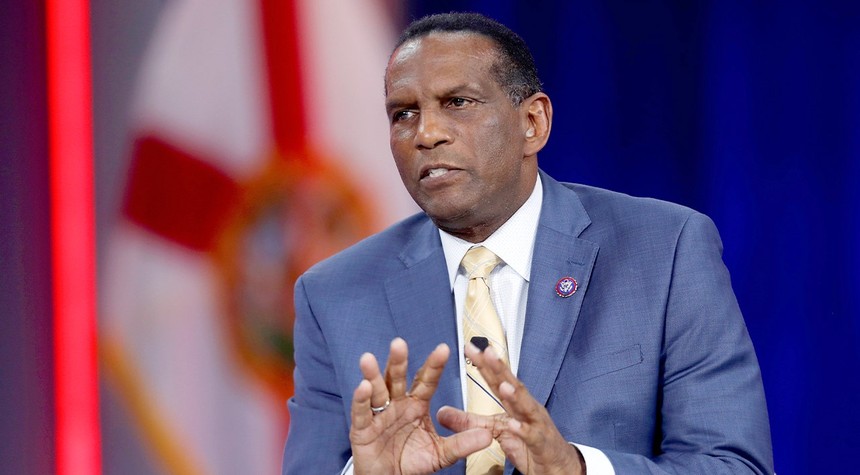
Two other Utah Republican representatives, Burgess Owens and Celeste Maloy, had joined the legal challenge. While they accepted the court’s decision, their joint statement made clear this was no happy ending for those who believe in constitutional governance.
“We receive today’s decision with profound disappointment but respect for the Court’s careful review,” the statement read. The lawmakers emphasized that this case touches on something far more significant than any single election cycle. It concerns the fundamental question of who holds authority over federal elections under the Constitution.
The Republicans’ argument deserves attention. They maintained that the Constitution assigns redistricting responsibility to state legislatures, not to judges. That is not a trivial point. It goes to the heart of how our republic functions and whether elected representatives or appointed judges have the final say in shaping electoral districts.
“We remain convinced that the Constitution assigns this responsibility to the State’s lawmaking authority and that this principle is essential to preserving constitutional order and the rule of law,” the statement continued.
The irony here is thick enough to cut with a knife. A state judge initially ordered the new map, striking down the congressional voting lines that Utah’s elected legislature had adopted. Now a federal panel has upheld that decision, effectively overriding the will of the state’s lawmaking body.
Representative Moore will not be left without a seat. Under the new configuration, he will represent Utah’s 2nd District. But the political calculus has changed dramatically. What was once a safely Republican seat now becomes competitive territory where Democrats have a legitimate shot at victory.
This ruling arrives as an unusually high number of lawmakers are retiring from Congress ahead of the midterm elections, adding another layer of uncertainty to an already volatile political landscape.
The broader implications extend well beyond Utah’s borders. If courts can override state legislatures on redistricting matters, what does that mean for the separation of powers? What does it mean for federalism? These are questions that will not be answered in this single case, but they loom large over our political future.
The Republicans who challenged this map may have lost this round, but they are right about one thing. Having these issues heard and debated has strengthened public understanding of what is at stake. The question now is whether anyone in power is listening.
Related: Robert De Niro Claims Trump Will Refuse to Leave Office, Calls for Mass Protests