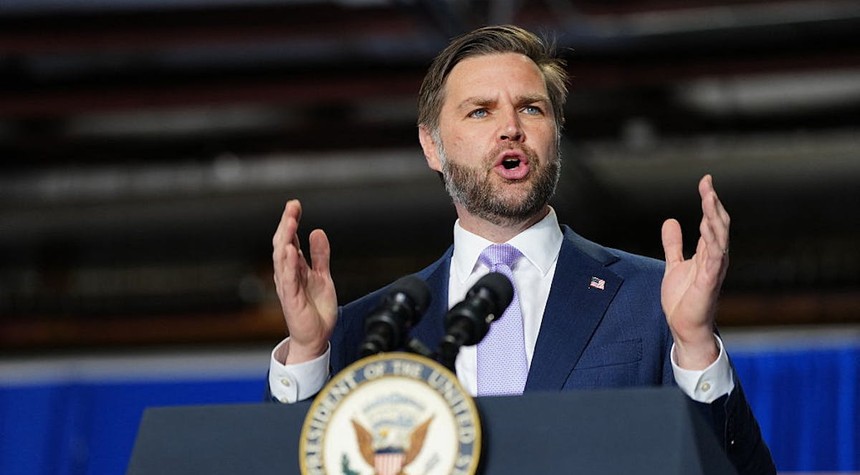
There are moments in American politics when the contrast between competing visions becomes crystal clear. Thursday in Bangor, Maine, was one of those moments.
Vice President JD Vance stood before an enthusiastic crowd and laid out what appears to be the opening salvo of the Trump administration’s midterm messaging strategy. The centerpiece of his remarks was not subtle: Democrats, he argued, are more interested in protecting their political positions than protecting taxpayer dollars from fraud and abuse.
The numbers Vance cited should make any reasonable person sit up and take notice. Tens of millions of dollars in fraud have been uncovered in Maine alone, a state with a population smaller than many American cities. Yet according to the vice president, state officials have offered precisely zero cooperation with federal efforts to root out this corruption.
“What I find so preposterous about Maine is not just that we have found tens of millions of dollars of fraud in a relatively small state, but that we have had no cooperation from the state government,” Vance said. He did not mince words about who bears responsibility for this obstruction.
Democratic Governor Janet Mills found herself squarely in the vice president’s crosshairs. Vance suggested that Mills has allowed her political career to be consumed by defending transgender ideology while ignoring the bread-and-butter issue of protecting Maine citizens from being defrauded by their own government. He issued a direct challenge to the governor to cooperate with the White House Anti-Fraud Task Force before her tenure ends.
“I would love to work with the governor of Maine to stop the fraud that is being perpetrated in this state,” Vance said. “This should not be a red or blue state issue. This is not Republican or Democrat. This is common sense. This is protecting every person in this room from being defrauded by their own government.”
The vice president’s framing is worth examining closely. He is attempting to position fraud prevention as a bipartisan, common-sense issue that transcends political tribalism. Whether that message resonates with voters remains to be seen, but the political calculation is transparent. If Democrats refuse to cooperate on rooting out fraud, they own that refusal come election time.
This marked Vance’s first trip specifically dedicated to promoting the Anti-Fraud Task Force, and he leaned into the messaging with considerable force. The pitch to working Americans was straightforward: you play by the rules, you pay your taxes, you do things the right way, and you deserve leadership that protects those hard-earned dollars.
“For the first time in a very long time, you have got an administration in Washington that is fighting for you, fighting to protect your tax dollars, and fighting to put the fraudsters in prison,” Vance declared.
To illustrate the scope of the problem, the vice president pointed to a specific case. Rakiya Mohamed, a thirty-year-old woman, pleaded guilty in early March to filing false tax returns. The case serves as exhibit A in the administration’s argument that fraud is not some abstract concept but a concrete problem with real perpetrators who need to face real consequences.
The political implications of this Maine visit extend well beyond New England. Vance appears to be road-testing a message that could define Republican campaigns nationwide: we are the party that protects your money from fraudsters, and Democrats are the party that looks the other way.
Whether voters buy that message will depend largely on whether the Anti-Fraud Task Force can continue producing tangible results. For now, the vice president is betting that exposing fraud and demanding accountability is a winning formula.
Related: Taxpayer Money Under Scrutiny as Senate Probes Youth Gender Transition Programs