
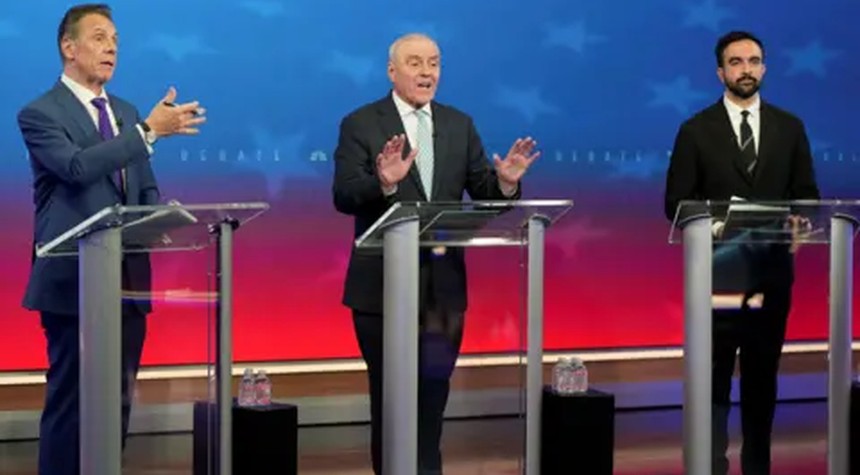
In the heart of Manhattan, where dreams and political ambitions often collide, three candidates vying to lead America’s largest city squared off Thursday night in what can only be described as a watershed moment for New York’s future.
The debate at Rockefeller Center laid bare the stark choices facing New York voters: progressive challenger Zohran Mamdani, independent Andrew Cuomo, and Republican Curtis Sliwa presented markedly different visions for a city at a crossroads.
Mamdani, currently leading polls with 46% support, found himself defending his stance on international issues, particularly regarding the Israeli-Palestinian conflict. The progressive assemblyman, pressed repeatedly about past statements, maintained his position while attempting to reassure New York’s diverse Jewish community.
“Let me be crystal clear,” Mamdani stated, carefully measuring his words, “my commitment is to serve all New Yorkers, and that includes understanding the complexities of international law and its applications.”
Cuomo, trailing at 33% in recent polling, seized upon these moments to paint his progressive opponent as too radical for New York’s mainstream. The former governor’s attacks were pointed and persistent, particularly regarding Mamdani’s alleged reluctance to condemn certain controversial statements and groups.
But like a shadow over the proceedings, the specter of Donald Trump loomed large. The former president’s threats to deploy National Guard units to Democratic-led cities and withhold crucial infrastructure funding have created a complex chess game that New York’s next mayor must navigate.
The debate highlighted a fundamental question facing voters: Should America’s largest city embrace progressive change, return to establishment centrism, or pivot toward Republican law-and-order policies?
Sliwa, the Republican candidate, emphasized public safety and positioned himself as a bridge between federal authorities and city interests. His platform, focused on crime reduction and quality of life issues, has found surprising resonance in traditionally Democratic neighborhoods.
As early voting approaches next week, the stakes couldn’t be higher. New York City stands as a Democratic stronghold, but this election could signal shifting political winds nationally. The outcome will likely influence how other major cities approach issues from public safety to foreign policy.
The tension in the room was palpable as candidates traded barbs over housing policy, public safety, and international relations. Yet beneath the political theater lay serious questions about New York’s identity and future direction.
This isn’t just another mayoral race – it’s a referendum on how America’s premier city will face challenges ranging from affordable housing to international diplomacy, from public safety to economic recovery. As the candidates made their final pitches, one thing became clear: New York stands at a crossroads, and its choice will reverberate far beyond the five boroughs.
Related: Historic Southern Town Experiences Revival Through Architectural Heritage