
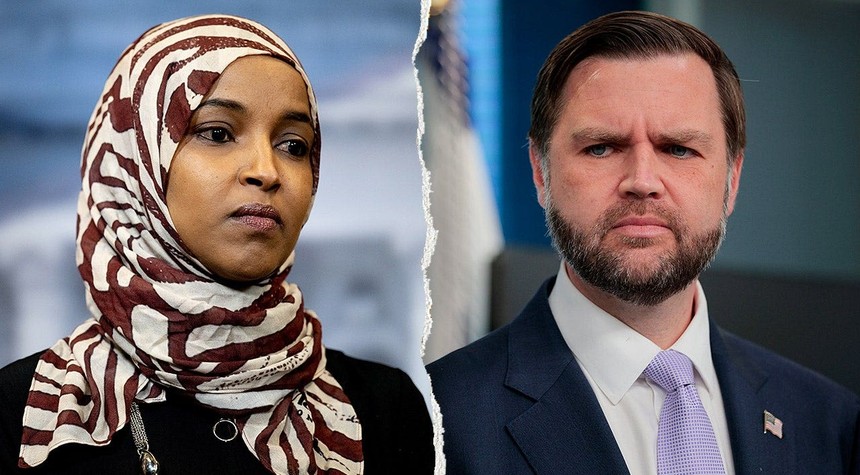
The truth has a way of getting muddy in Washington, and right now there is a considerable dispute about what the Justice Department may or may not be investigating when it comes to Representative Ilhan Omar.
Vice President JD Vance stated this week that the Department of Justice has opened an investigation into the Minnesota congresswoman, focusing on allegations of immigration violations and financial irregularities. These are serious charges that have circulated for years, including persistent claims about Omar’s immigration history and questions surrounding her financial disclosures.
Omar fired back with characteristic defiance, calling Vance “delusional” and dismissing the entire matter as political theater designed to generate headlines. According to the congresswoman, there is no investigation, no task force, and no federal resources being devoted to examining her conduct.
“That is not something that is happening,” Omar stated flatly when asked about Vance’s claims. She went further, suggesting Republicans are manufacturing these allegations purely for media attention.
The controversy gained fresh momentum last month when Omar’s amended financial disclosure forms revealed a startling shift in her reported net worth. Previous filings had placed her wealth somewhere between six million and thirty million dollars. The updated forms showed assets ranging from just over eighteen thousand to ninety-five thousand dollars.
That kind of financial swing raises questions that any reasonable person would want answered. The House Oversight Committee, led by Republicans, has taken notice and requested business records from the company owned by Omar’s husband, Tim Mynett.
Vance claimed the administration’s anti-fraud task force has made Omar a priority, revisiting long-standing accusations that have dogged her career, including allegations involving her marriage history and immigration status. These are claims that have been investigated before without resulting in charges, but they continue to surface in political discourse.
Omar characterized the Republican focus on her finances as nothing more than politicians seeking television interviews. She used colorful language to describe what she views as baseless accusations, suggesting GOP members are making noise without substance.
The timing is notable. As the new administration settles into power, questions about how vigorously it will pursue investigations into political opponents remain front and center. Vance’s public statements suggest a willingness to use federal resources to examine Democrats they believe have violated the law.
Yet without confirmation from the Justice Department itself, the public is left to sort through competing claims from politicians with obvious partisan interests. The department typically does not confirm or deny ongoing investigations, which means this dispute may continue without resolution for some time.
What remains clear is that Omar’s financial disclosures have created legitimate questions that deserve answers. Whether those answers come through a federal investigation or congressional oversight, the American people have a right to know how their elected representatives accumulate and report their wealth.
The back-and-forth between Omar and Vance illustrates the deep distrust that now defines Washington. One side sees political persecution, the other sees accountability. The truth, as it often does, likely lies somewhere in the complicated middle.
Related: Treasury Department Targets Hamas-Linked Networks Behind Gaza Flotilla Campaign